A map of memories looks nothing like a map of streets. On the corner where the pharmacy now stands, someone remembers a bicycle repair shop with a bell over the door. Two houses down, a woman in her eighties can still name every family on the block in 1962. None of that fits into a planning document, and none of it should be lost.
The good news is that you do not need a licence, a consultant or a budget line to hold onto it. You need a boundary, a base map, a stack of index cards and a few patient afternoons. Here is how to build a neighbourhood story map that a small group can actually finish — and, more importantly, keep going.
Start with a boundary you can walk
The first mistake is scale. A map of "the town" or "the old quarter" swallows a volunteer group whole. Pick an area small enough that you can walk its edge in under an hour: two streets, a courtyard block, the length of a market square and the lanes behind it.
Memory attaches to corners, not to municipalities. A tight boundary keeps the project collectable, and it makes the finished map legible to someone standing on the pavement trying to find the place where the cinema used to be.
Write the boundary down. Decide the awkward cases now, before anyone is disappointed: is the corner bar just outside the line in or out? Then find a base map. You can print a street plan from OpenStreetMap free of charge, photocopy a paper map you already own, or draw the streets yourself on a large sheet. A hand-drawn base is not a compromise — it lets you include the passage that was closed in 1987 and the bakery that no longer appears on any official plan.
Collect memories before you draw anything
Resist the urge to start pinning. Pins are the last step, not the first. Start with conversations at kitchen tables, after mass, at the market stall, on a bench in the sun. People tell better stories when there is no map in front of them.
Ask for specifics rather than for history. "Tell me about the neighbourhood" produces polite generalities. "What was on this street when you were ten?" produces detail you can use. Keep a phone recorder on the table, ask permission first, and stop after ten minutes — one good memory is worth more than a long, tiring interview.
Questions that open people up
- Which shop did your family avoid, and why?
- Where did people wait for the bus before the shelter was built?
- What sound could you hear from this window on a Sunday morning?
- Who lived in the house on the corner, and what were they known for?
- What is gone now that you still miss?
- What has stayed exactly the same, and who kept it that way?
Transfer each memory onto an index card before it evaporates: the place, a rough date, who told you, a one-line summary, and whether a photograph exists. One memory, one card.
Choose your format honestly
There is no single right medium, only the one your group will maintain. Be honest about who is going to do the upkeep in six months.
- Paper map on board. A large print mounted on foam board, coloured dot stickers, numbers written in pencil. Cheap, robust, brilliant at events, easy for anyone to add to.
- Spreadsheet and a printed map. The ledger does the storing, the paper does the showing. This is the most durable low-cost combination.
- A free digital map. Tools such as Google My Maps or the open-source uMap let you drop pins with text and photos, and share a view-only version. No payment needed, but you do need an account.
- A hybrid. Keep the full record digitally, print copies for events and for anyone who prefers paper. Nothing is lost when the laptop dies.
Whatever you choose, export a copy in a format that will still open in ten years — a PDF of the map, a CSV of the ledger — and store it in more than one place.
Build a numbering system and a ledger
The map is the visible part; the ledger is the part that survives. Keep them tied together with numbers, not names, because names change and spellings vary.
- Number each pin in order: 001, 002, 003.
- Create a ledger with columns for number, place name, address or description, contributor, date recorded, memory summary, photo file name and permission status.
- Mark the same number on the map and on the index card.
- Name audio files with the same number so a recording is never separated from its pin.
- Keep the ledger in two places — a printed copy in a folder and a digital copy shared with at least one other person.
This sounds fussy for a project with twelve pins. It stops sounding fussy around pin number eighty, when someone asks a question about the third bakery on the left and you can find the answer in under a minute.
Make it readable for strangers
A map that only makes sense to the people who built it is a private scrapbook. Write captions for someone who has never lived there. Not "the old bakery", but "Forno Rossi, closed in the mid-nineties; the Sunday queue ran to the corner and people left bags in the doorway to hold their place."
Add a legend, a north arrow and a rough scale. Use two or three colours at most, and make sure the numbers are large enough to read at arm's length.
Handle people with care. Ask before publishing a photograph of someone's face, credit the person who owns the picture, and check before you print the address of a private house. Some memories are painful — a demolition, a closure, a death on the street — and the person who told you may not want it on a public sheet. Ask. If in doubt, leave it out or keep it anonymous, and note the decision in the ledger so nobody has to relitigate it later.
Host a pin-and-tell to fill the gaps
One evening in a borrowed room will do more than a month of chasing people individually. Book a hall, a library corner or the back room of a café. Bring the large printed map, a roll of stickers, a pile of index cards, a laptop for copying photos and a phone for recording short memories.
Put one person at the door to greet, one at the map to place pins, and one at the table to write. Ask everyone to bring a single photograph. Keep a visible "we don't know" list — the gaps are honest, and they invite someone in the room to fill them. Two hours, tea, and a firm closing time works better than an open-ended invitation.
Keep it small enough to keep going
A modest map updated twice a year beats a beautiful one abandoned in a cupboard. Protect the project with small rituals: a monthly walk along the boundary, a seasonal refresh of the pins, a simple file-naming rule, a one-page sheet explaining how the map works, and at least two people who hold the passwords and know where the folder lives.
Start with ten pins. Print the map, stick them on, and put it up somewhere people pass — a shop window, a library noticeboard, the entrance to the community hall. The first person who stops to argue with a pin about the exact location of the old bakery is your next volunteer.
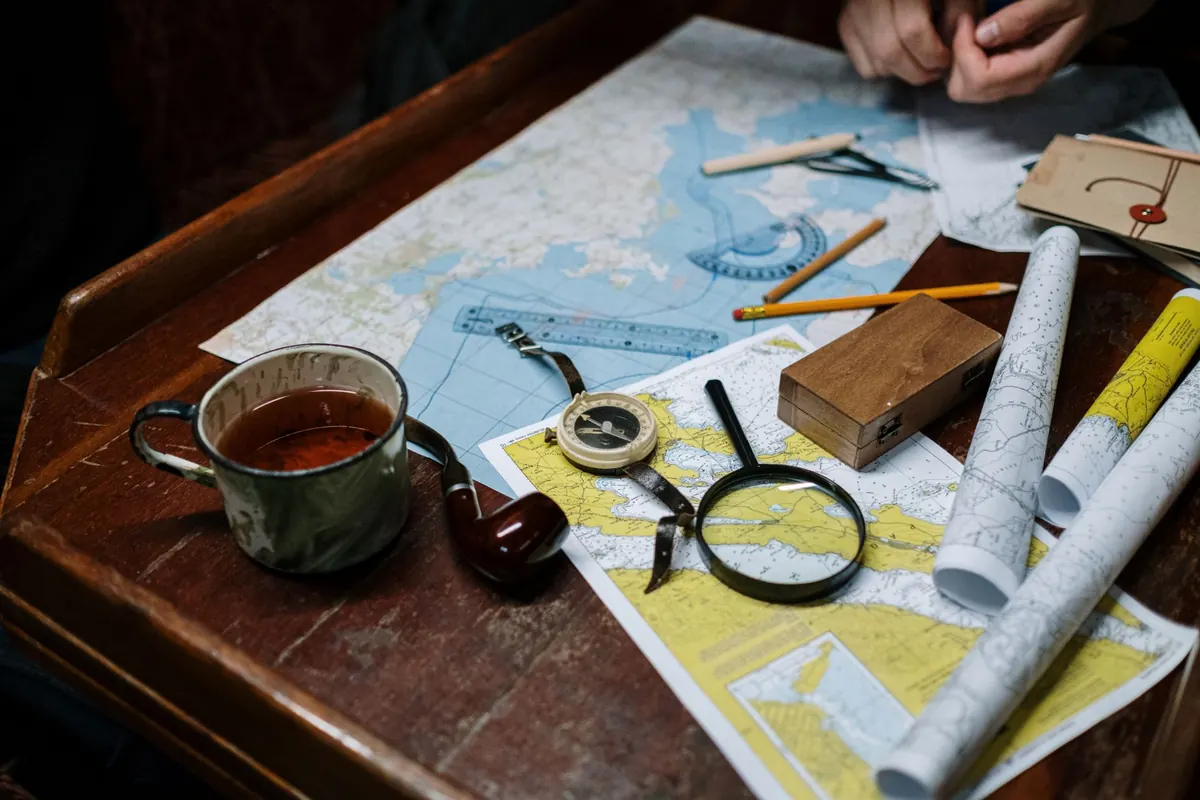
Photo: cottonbro studio / Pexels