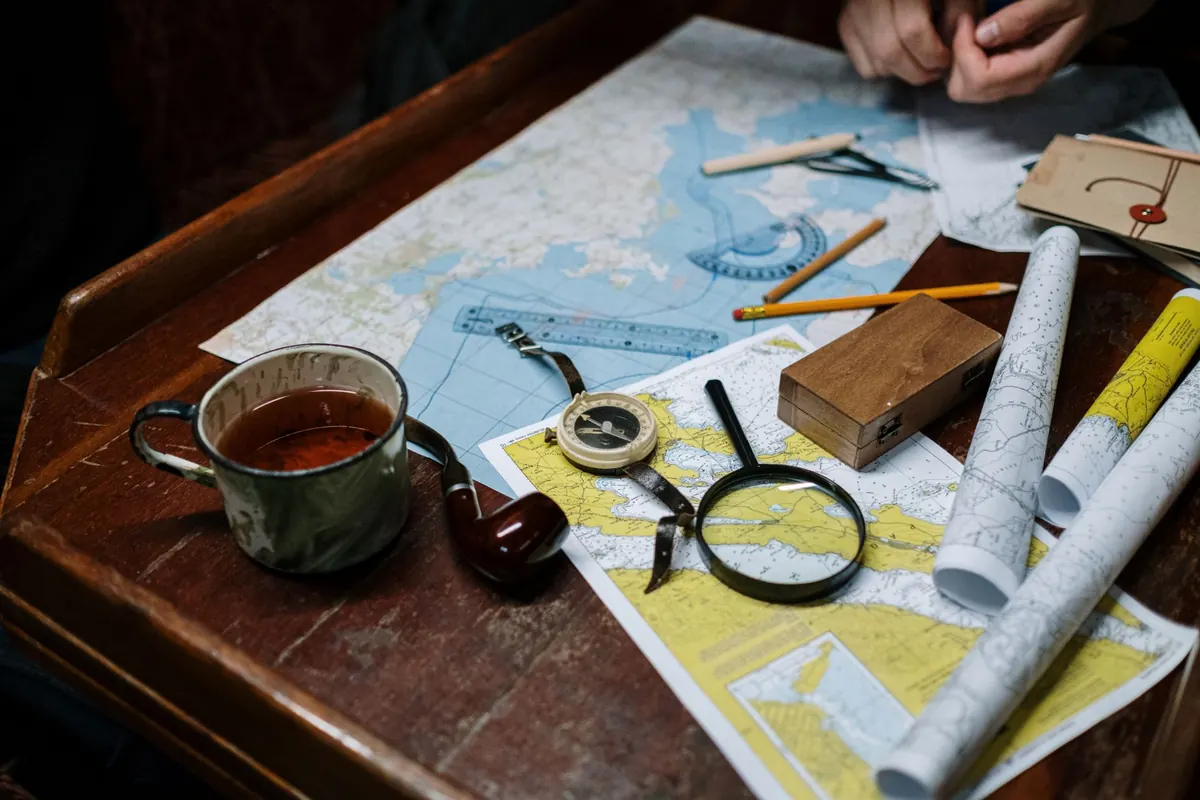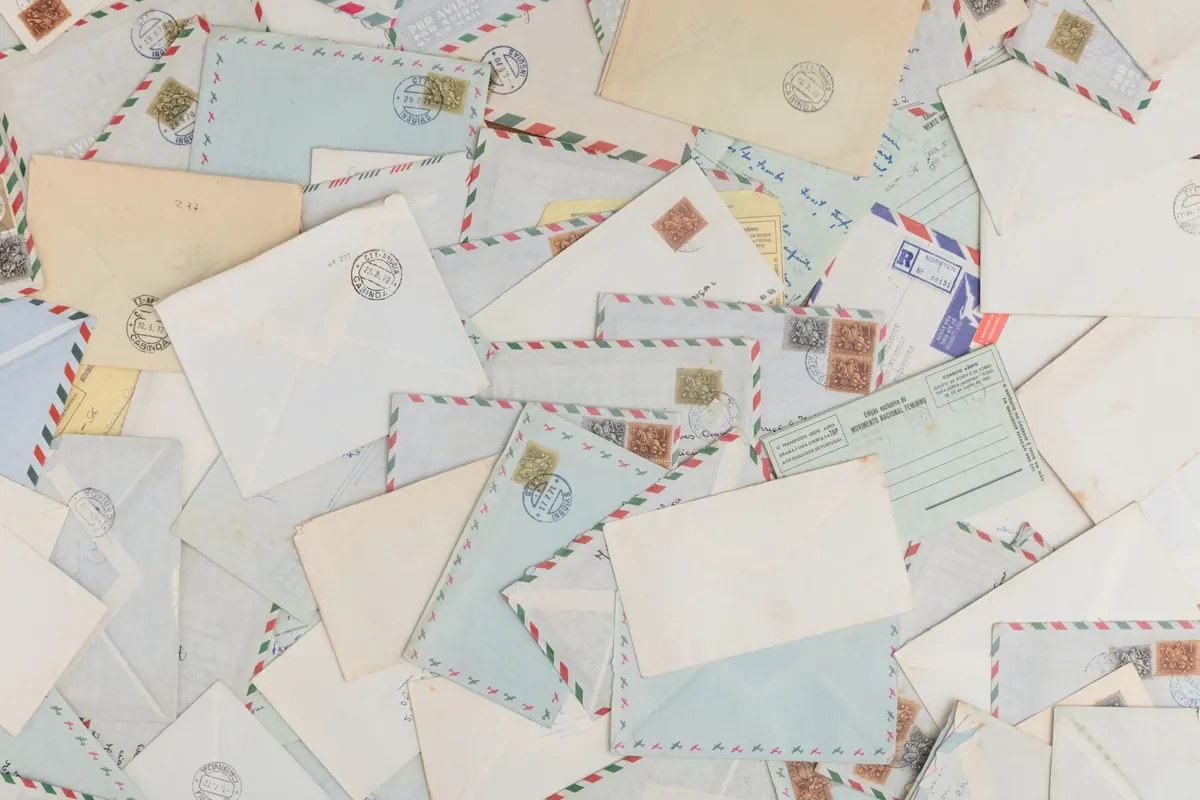
The shoebox is almost always in the same place: the top shelf of a wardrobe, behind the spare blankets, holding forty years of postcards, a bundle of airmail letters still tied with string, and three delivery slips nobody can quite explain. Nobody wants to throw the box out. Nobody wants to open it either, because the paper has gone soft, the string has turned brittle, and once the pile is disturbed it never seems to go back the way it was. Here is a workable way to change that this month, without a conservator's budget or a museum storage room.
Begin with a slow sort, not a clear-out
Set aside a dry afternoon and a table you can leave half-covered for a few days. Empty the box in small batches rather than tipping the whole thing out at once, and give yourself three destinations instead of two: keep and store properly, keep the information but not necessarily the object, and undecided.
Before you untie anything, photograph the bundle as it was found. Original groupings carry meaning. A stack of postcards held together with a rusty pin was kept together for a reason, and the order of postmarks often tells you more than any single card: three letters from the same address in one week usually means something happened, and it is worth noting before you alphabetise it away.
Resist the urge to sort by person on the first day. Work by bundle, note what you find on the outside of an envelope in pencil, and stop after ninety minutes. Tired hands are the ones that tear corners and knock over glasses of water.
Handle paper as though it is already fragile
Old paper is stronger than it looks and far less forgiving than you expect. Most damage to family collections is caused not by age but by well-meant repairs and rushed handling.
- Wash and dry your hands before you start. Skip hand cream, and keep coffee, biscuits, and curious cats off the table.
- Cotton gloves are useful for photographs and anything metal; for brittle paper, clean dry hands give you better control. Either way, no rings or watches that catch on an edge.
- Slide a stiff piece of card under a fragile sheet and lift the card, never the corner of the letter.
- Do not use tape, glue, laminating pouches, rubber bands, or paper clips. Tape yellows, glue stains, and a laminated postcard is a postcard you have altered for good.
- Leave string and pins alone unless they are rusting onto the paper; if rust has stained a letter, separate it with a sheet of acid-free tissue and get advice rather than scraping at it.
- Keep newspaper clippings away from everything else. They are acidic, they darken, and they transfer stains to whatever they touch. Interleave them with buffered tissue, or copy the information and store the clipping separately.
- Write only in pencil, only on the back, only in a corner, and lightly. Never across the handwriting.
- Do not fold and unfold the same crease each time you show someone a letter. Read it once, scan it, and put it back flat.
Storage that stays boring
Good storage is dull: stable, dry, dark, and a little loose. Buy boxes described as acid-free and lignin-free, or museum-quality, from a supplier that says so plainly. A shoebox is fine as a temporary tray for a week, not as the final home.
- Where: an interior cupboard in a room you actually heat and live in. Not the attic, not the cellar, not the garage, and not against an outside wall where condensation gathers. Bathrooms and kitchens are the worst rooms in the house for paper.
- How: flat for brittle or oversized items, upright in folders for anything you want to browse. Never overstuff. If you have to push, the box is too full and the folders will bend.
- What to avoid: cling film, vacuum bags, PVC sleeves, and damp cardboard boxes sitting directly on a concrete floor. Polyester sleeves are fine and are easy to find.
- Separate the troublemakers: newspaper, leather, textiles, and anything with active rust go into their own enclosure, not into the middle of the letters.
- Check once a year. Pick a date you will remember, open every box, look for mouse droppings, silverfish, damp corners, and new brown spots. Ten minutes a year is enough.
Scanning: capture both sides, then name the file
Scanning is insurance. It is also how a family collection stops being one person's burden and becomes something cousins, neighbours, and local history groups can use. The aim is not perfection; it is a decent copy you can find again in five years.
Settings without agonising
Use a flatbed scanner where you can. Choose 300 dpi for typed letters and 600 dpi for postcards, photographs, and delivery notes, which are usually small and handwritten. Scan in colour even when the paper looks grey or the ink looks black — the tones of age are part of the object. Scan the back of everything. On a postcard the back is often the point: the stamp, the postmark, the address in a hurry.
If a phone is all you have, put the item on a plain dark surface near a window, hold the phone parallel to the page, and switch off the flash. Take a second shot of the whole envelope so the item stays connected to its context.
A naming system that survives
Folders help and so do descriptions, but file names do most of the work. A simple pattern your family can copy is enough:
1962-04-11_Rossi_Enrica_Torino_to_Livorno_001.tif
Date, sender, place, recipient or place, then a running number. Keep an untouched master copy of each file and make a smaller working copy for sharing. Store the masters in three places — the computer, an external drive, and a folder that lives somewhere else — and check the drive every couple of years, because hardware fails quietly.
Label now, in plain words, and start an index
Handwriting on the back of an envelope is the single most valuable thing you can add, and the thing people most regret not doing. In ten years, "Nonna's cousin from Buenos Aires" becomes a name nobody can place. Write in pencil on the enclosure, never on the item, and put the detail on a folder label.
A useful label answers six questions: who wrote it, to whom, from where, when, who these people are to the family, and what the item is. If the date is a guess, say so — "c. 1952?" is honest and still useful. Add anything odd: a delivery note marked "rimandato a domani" in blue ballpoint, a card with no message, a letter that arrived with a photograph inside.
Keep one index file, paper or spreadsheet, with the same fields as your labels and the matching file names. If the house floods, the index is what lets somebody rebuild the story.
Damp, damage, and other people's privacy
If you find mould — grey or white fuzz, a musty smell, dark tide marks — isolate the affected items in a dry room, do not vacuum them with a household vacuum, and ask a paper conservator or your local archive for advice before you attempt cleaning. The same goes for pages stuck together, wax seals, and anything that looks genuinely valuable. Do not test a repair on an object you cannot replace.
Privacy deserves a thought too. Letters can contain medical details, money troubles, and blunt opinions about people who are still alive. Before you post a scan in a family group or hand a bundle to a local history project, read it through and decide. If an item touches inheritance, property, or someone's reputation, take advice before publishing rather than after.
A checklist to keep on the shelf
Photograph bundles before you disturb them. Work in small batches with dry hands and no tape. Buy acid-free boxes and put them in a living room cupboard, not the attic. Separate clippings, rust, and leather. Scan both sides at 300 to 600 dpi and name the files consistently. Back up the scans in three places. Label with names, places, guessed dates, and relationships. Note condition problems rather than fixing them. Read a letter aloud at a family lunch, ask permission before sharing, and invite the neighbours who remember the postino's handwriting.
- Sort into keep, scan-only, and undecided — nothing leaves the house on day one.
- Note what was found together, before you separate it.
- Clean, dry hands; pencil only; no adhesive of any kind.
- Acid-free boxes, stable room, flat where needed, never overfilled.
- Newspaper, rust, and leather stored apart from letters.
- Scan both sides; keep a master copy and a sharing copy.
- Name files date-first, with a running number.
- Write the index entry the same week, not the same year.
- Annual ten-minute inspection, every October.
- Consult a conservator for mould, stuck pages, or anything irreplaceable.
None of this needs to happen at once. Open the box, photograph one bundle, put it back better than you found it. The rest of the shelf will follow.
Photo: craveiro_ pics / Pexels