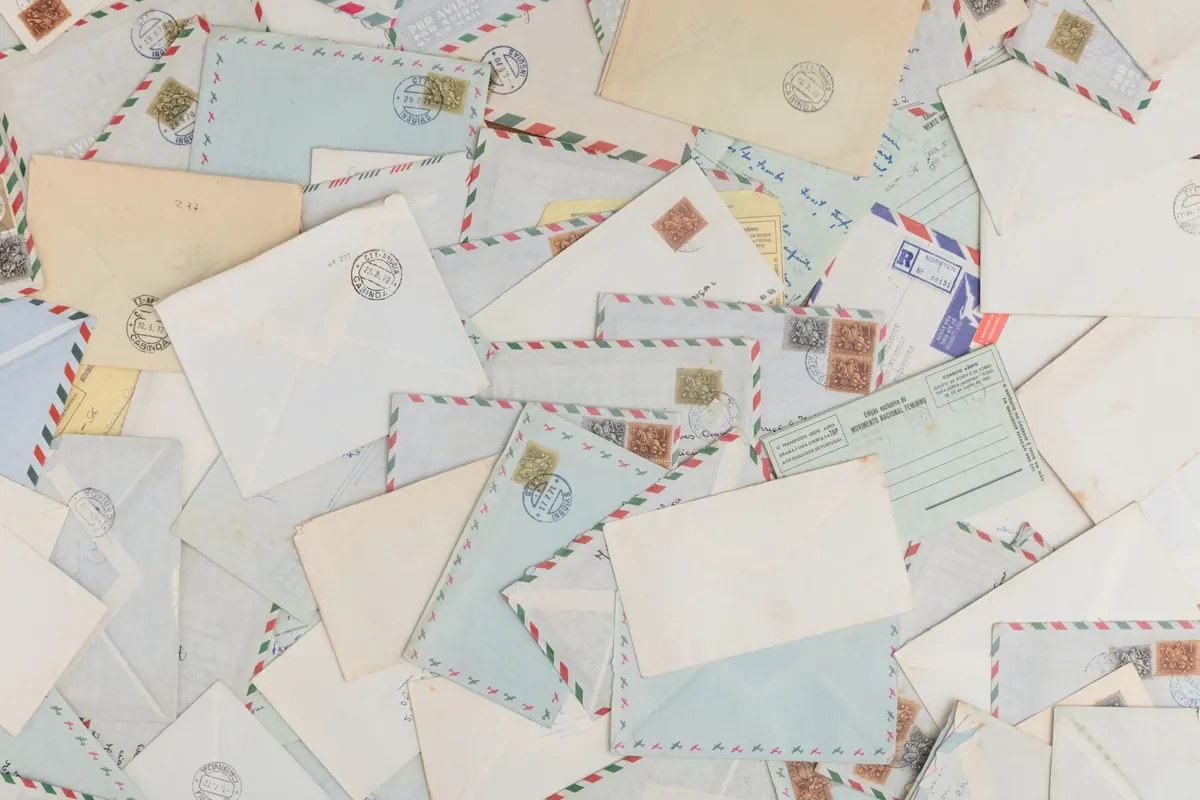
Two documents sit open on the table. The parish baptism register gives a date of 12 March. The town chronicle, in the same year, mentions the child's family burying a grandmother "on the day the hail destroyed the vines," and puts the whole business in April. Neither writer was careless. They were counting different things. Anyone tracing a hill town's past learns this quickly: the church book and the civic chronicle rarely tell the same story twice, and the work lies in reading them against each other rather than choosing a favourite.
Two Records, Two Purposes
Before comparing anything, it helps to be clear about what each source was for. They were not written for historians. They were written as working documents, and the work each one did shaped what it bothered to record.
The parish register
Parish registers exist because the Church needed to know who had been baptised, who had married, and who had died in the community. After the Council of Trent, parishes were required to keep registers of baptisms and marriages, and burial records followed with more variation from place to place. The entries are usually short, formulaic, often in Latin, and written close to the event — a baptism typically within a day or two of birth, a burial within a day of death. That proximity is the register's great strength. Its weakness is that it records the ritual, not the life. You learn a name and a godparent and a date. You do not learn that the harvest failed or that the road washed out, unless the priest happened to add a note.
The town chronicle
A chronicle is a narrative, kept by a person — a notary, a canon, a landowner with time on his hands — who decided what was worth remembering. It is generous with weather, prices, fires, floods, processions, feuds, visitations and oddities. It is stingy with the ordinary. A chronicler might ignore forty uneventful baptisms and then devote half a page to a bishop's visit. Dates are frequently approximate, and the chronology sometimes bends to fit a moral point the writer wanted to make.
When the Register Deserves the Benefit of the Doubt
For the bare facts of a sacrament, trust the register first. The priest was recording something he had just performed, in a book he was required to keep, and the entry was usually made the same day. For baptism dates especially, the register is close to a primary source: it tells you when the rite happened, which is normally within days of the birth.
It also gives you structure. Godparents, witnesses and the recurring family names in the margins build a picture of who was connected to whom — information no chronicle bothers with. When you need to fix a person in time, the register is your anchor.
Know its limits, though. Gaps appear during wars, epidemics and periods of neglect. Some priests wrote everything in Latin with heavy abbreviation; others wrote in dialect. Stillbirths and unbaptised infants may be absent or recorded separately. And a name spelled one way in 1740 may be spelled three ways by 1780, all referring to the same family.
When the Chronicle Knows More
For events, the chronicle usually wins. If a bridge collapsed, a granary burned, a procession drew the whole valley, or snow lay in the square until April, the chronicler was likely there or heard it from someone who was. Parish books will not tell you why a family left, why a marriage was rushed, or why the harvest that year was worthless.
Chronicles also preserve the sequence of things. Two entries in a register tell you that a marriage happened and a burial happened. A chronicle may tell you that the marriage took place in the week the river flooded and the burial followed a fever that came through in the autumn. That is the difference between a timeline and a story.
Treat dates in a chronicle as approximate unless the writer had reason to be precise. "Around St Martin's" can mean anything within a fortnight of 11 November. Reckonings vary too: some writers used the old Italian hours counted from sunset, so "the third hour of the night" is not a clock time but a position relative to dusk.
Cross-Checking Names
Names are where the two sources meet most often, and where they most often seem to disagree. A few habits will save you a great deal of confusion.
- Transcribe exactly, then normalise separately. Copy the name as written — Ferrerius, Ferrero, Ferreri — in one column, and write the modern form in another. Never tidy the original in your notes.
- Watch the Latin genitive. A register entry for the daughter of Giovanni Battista may read "filia Joannis Baptistae." The surname may be absent entirely, since the priest knew exactly whose child this was.
- Track women across both surname systems. A woman appears under her father's name at marriage and under her husband's at burial, sometimes with a "vidua" or "uxor" to help. Link her through the marriage entry, which usually names both.
- Use godparents as confirmation. If the register lists a godfather with a surname that recurs in the chronicle's account of the same family, you have a link worth noting.
- Expect nicknames to become surnames. Two branches of a family may be distinguished in the registers by a house name or a trade, and that label can harden into a fixed surname within two generations.
Cross-Checking Dates
Dates require the same patience, with a few local traps.
- Convert feast days. "St Lawrence's day" is 10 August; "St John's" is 24 June; "St Martin's" is 11 November. Keep a conversion table beside your notes.
- Watch the calendar change. Much of Italy adopted the Gregorian calendar in October 1582, so dates before and after that line are not directly comparable across regions.
- Note the gap between birth and baptism. A baptism date is not a birth date, though it is usually within a few days. When the two sources differ by a week, this is often the reason.
- Check whether the chronicler is copying. Many chronicles borrow from earlier ones, and an error introduced in 1690 can repeat itself faithfully for a century.
When They Disagree
The instinct is to decide who was right. Resist it for a while. A disagreement is itself a piece of evidence, and most of them fall into a handful of patterns: a baptism recorded weeks late because the priest was away; a chronicler dating an event by the feast nearest to it; a family remembered under a different surname; a plague year in which several entries were written up afterwards from memory.
Write down the conflict in plain language instead of resolving it. "Register gives burial 4 May 1782; chronicle says the fever took the shoemaker's household in June." Then look for a third source that does not share either writer's habits: a notarial act, a property survey, a tax register, a tombstone, a later communal record. Italian civil registration begins in many places under Napoleon and resumes with the commune after unification, and those records often settle questions the parish book left open.
Keeping a Comparison Sheet
The practical answer is a simple table, kept from the first day. One column for the parish register, with the page or folio number and the archive that holds it. One for the chronicle, with the edition or manuscript reference. One for the third source, if you have one. One for what you now believe, and one for what remains unresolved.
Photograph the pages you use and name the files by date rather than by subject, so they sort sensibly later. Write the archive, the register volume and the folio on every note — you will need it again, and memory fades faster than paper. For access, ask the parish or diocesan archive about the registers and the town or state archive about the chronicle; opening hours are usually short and worth confirming before you travel.
And leave the disagreements visible. A local history that shows its workings, conflicts and all, is more useful to the next person than one that quietly smooths them away.
Photo: Tama66 / Pixabay